When people first come across GamsGo, it is easy to put the website into a familiar category. The platform has a substantial collection of digital subscriptions, so the natural assumption is that GamsGo is simply another place to access streaming services, software, or other online memberships.
That impression changes pretty quickly once you explore the website.
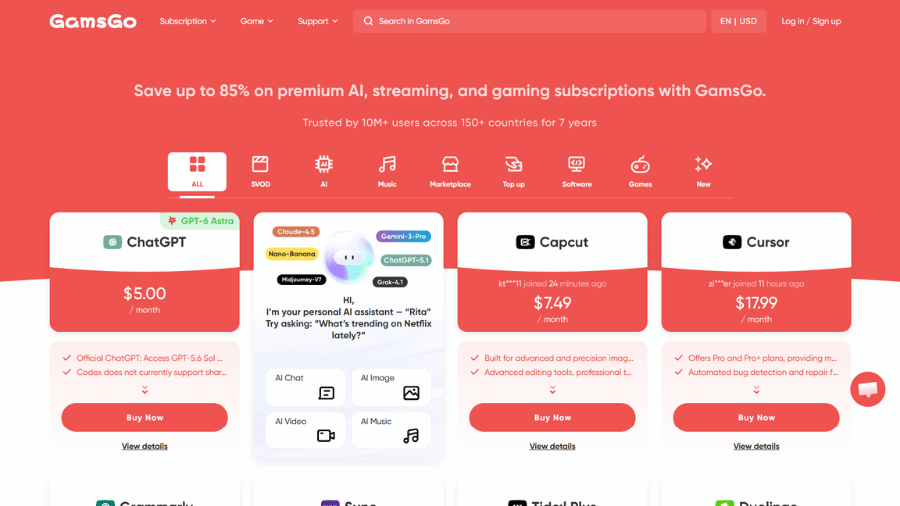
GamsGo covers a much wider range of digital products, including subscriptions, AI services, software, music, gaming accounts, game top-ups, digital items, gift cards, and virtual currencies. Instead of focusing on just one type of online service, the platform brings together several parts of the digital economy that people increasingly interact with every day.
That makes GamsGo more interesting than a typical subscription website.
It also raises a more useful question: what exactly is GamsGo, and how does everything on the platform fit together?
A Different Kind of Digital Marketplace
The easiest way to understand GamsGo is to look at what connects its different categories.
A streaming subscription, an AI service, a software tool, and a gaming top-up may seem completely unrelated. They are used for different purposes and often have very different delivery methods. Yet all of them represent something that has become increasingly valuable online: digital access.
People don’t always need to own a physical product anymore. They may simply need access to a service for a certain period, the ability to use a particular tool, or digital content that can be added to an account they already have.
That is the common thread running through GamsGo.
The platform currently brings together entertainment and streaming services with AI tools, software, music services, and gaming products. The gaming side is particularly broad, covering accounts, top-ups, items, gift cards, and coins rather than treating every gaming purchase as the same type of product.
Once you look at GamsGo through that lens, its variety begins to feel much more intentional.
From Subscriptions to AI and Software
Subscriptions remain an important part of the GamsGo experience, but they are only one piece of the platform.
The subscription side covers digital entertainment and online services, while the AI category reflects one of the fastest-growing areas of digital consumption. People now use AI platforms for everything from writing and research to image creation, video production, coding, and productivity.
Software follows a similar pattern. Many tools that were once purchased as standalone programs are now delivered through online accounts and recurring access models.
Music fits into the same broader shift. Instead of purchasing individual albums or maintaining a physical collection, users increasingly access enormous catalogues through digital services.
GamsGo brings these different types of digital services into the same overall environment, which is one reason it doesn’t fit neatly into the traditional definition of a subscription website.
Gaming Reveals Another Side of GamsGo
The gaming section makes that distinction even clearer.
Modern gaming is no longer simply about buying a game and playing it. Many games now have their own digital economies, with players purchasing virtual currency, items, passes, accounts, gift cards, and other forms of digital content.
GamsGo reflects that structure by separating its gaming offerings into different categories. A player looking for an account is dealing with a different type of product from someone looking for virtual currency. A gift card is different again, while a direct top-up can deliver supported currency or content to an existing game account.
This difference is worth understanding because the word “gaming product” can cover several completely different transactions.
A direct top-up, for example, can use a player’s UID or Player ID to deliver supported game currency or items directly to an existing account. That makes it fundamentally different from receiving a gift card or purchasing access to another account.
The distinction may seem technical, but it becomes important as soon as you start comparing digital products.
How the Different GamsGo Products Compare
| Product type | What it generally provides | What matters most |
| Digital subscription | Access to an online service for a defined period | Duration, access method, region, and service conditions |
| AI or software service | Access to digital tools and features | Service type, available features, duration, and account access |
| Gaming account | Access to a particular game account | Account details, platform, region, and listing conditions |
| Game item or currency | Digital content used within a game | Game, platform, item or currency type, and delivery method |
| Gift card | Digital value that can be redeemed | Platform, region, denomination, and redemption requirements |
| Direct top-up | Digital value or supported content added to an existing account | Game, player information, region, and delivery process |
The table makes one thing clear: calling everything on GamsGo a “subscription” would leave out a significant part of what the platform actually does.
It also explains why the details of an individual listing can matter so much. The right information to check depends on what kind of digital product you are looking at.
There Is More Than One Way to Buy Through GamsGo
There is another part of the platform that helps explain its structure.
GamsGo operates through both its Direct GamsGo model and its Marketplace. These two approaches can look similar from the perspective of someone browsing the website, but they work differently behind the scenes.
With Direct GamsGo, the product is managed and provided directly through GamsGo. The Marketplace introduces independent sellers who can list eligible digital products for buyers.
That means the platform isn’t necessarily the seller of every product that appears on it.
For the buyer, this distinction is worth knowing because it can influence how a particular order is fulfilled and what information is provided on the product page. Marketplace listings can have their own descriptions, durations, delivery methods, regional conditions, and other requirements.
It is one of those details that can easily be overlooked when you are simply searching for a particular service.
But once you understand the difference between the Direct and Marketplace models, the variety across the platform becomes much easier to explain.
Why the Product Page Deserves More Attention
Online shopping has trained most of us to look at the product name first and the price second.
That habit makes sense when you are buying something physical. If you are choosing between two similar headphones, for example, the model, specifications, and price may tell you most of what you need to know.
Digital products are different.
The name of the service may be familiar, but the actual arrangement can vary considerably. The duration might be different. The access method could be different. There could be regional restrictions or account requirements. A Marketplace seller could be involved. The applicable warranty could also vary.
That is why the product page is more important than it might initially appear.
It doesn’t simply tell you what a product costs. It helps explain what you are actually receiving.
A person comparing two digital products should therefore look beyond the headline price and consider the entire arrangement. What is being provided, how will it arrive, how long will it last, and what conditions come with it?
Those details turn a simple listing into something much easier to understand.
Digital Delivery Doesn’t Follow One Formula
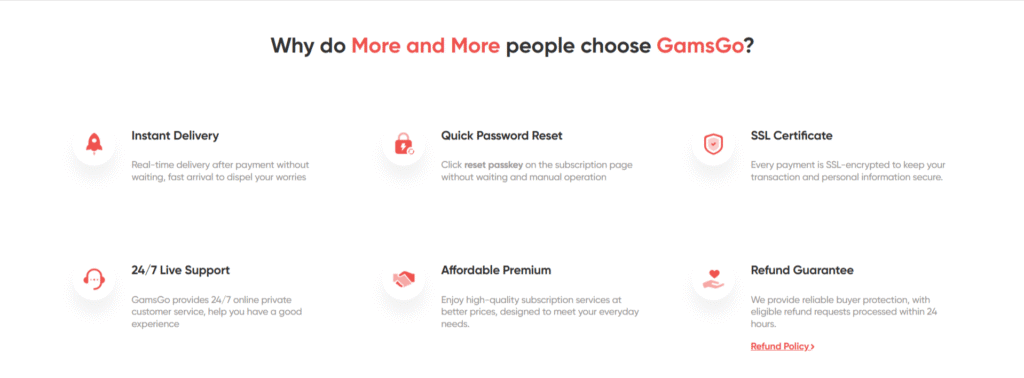
Another reason GamsGo cannot be described as a conventional online store is the way digital products are delivered.
There is no single warehouse process behind everything.
A subscription might involve access information or account credentials. A digital code may need to be redeemed. A gaming account involves a different type of access altogether. A game top-up may be delivered directly to an existing player account.
The delivery process follows the product.
That is particularly noticeable with direct top-ups, where the relevant game account can be identified using information such as a UID or Player ID. Instead of receiving something that needs to be physically delivered or manually installed, the digital value can be applied to the existing account.
This is a good example of how digital commerce has developed its own forms of delivery.
The product doesn’t have to arrive somewhere.
It can simply appear within an online service or account.
What Happens If Something Goes Wrong?
The convenience of digital products also creates a different kind of customer-service challenge.
If a physical package arrives damaged, the problem is usually easy to identify. With a digital product, an issue could involve access, account functionality, delivery, cancellation, or a difference between what was described and what was received.
GamsGo has systems designed to deal with these situations.
Eligible digital subscription and account products can have warranty periods, with the applicable protection depending on the product and its duration. Marketplace transactions can also fall under GamsGo’s DealShield system, which is designed to provide transaction protection and a process for resolving disputes between buyers and sellers.
The important thing to understand is that these protections aren’t necessarily identical for every product.
Digital marketplaces involve different products and different transaction models, so the individual listing and its terms remain important.
That is another reason why understanding the product itself is just as important as understanding the platform.
AI Shows How Quickly Digital Consumption Is Changing
The AI category on GamsGo is particularly interesting because it represents a relatively new stage in the evolution of digital services.
Not long ago, software was something people downloaded onto a computer or purchased as a permanent license. Today, many of the most widely used tools are online services that are continuously updated and accessed through an account.
AI has pushed this model even further.
People now use online AI services for writing, research, coding, design, images, video, and other creative or professional tasks. The value is not necessarily in owning a piece of software. It is in being able to use the capability when it is needed.
GamsGo’s inclusion of AI services alongside software, entertainment, and other digital products reflects that broader movement toward access-based digital consumption.
The Marketplace Makes the Platform More Dynamic
The Marketplace side adds another dimension because it changes how products reach the platform.
A traditional retailer generally decides what it wants to sell and maintains control over its catalogue. A marketplace can bring together products from independent sellers, creating a broader and more varied environment.
GamsGo’s Marketplace allows eligible sellers to list digital subscriptions, accounts, gaming products, and other digital goods within the platform.
That model naturally creates more variety, but it also makes transparency particularly important.
A Marketplace listing needs to explain what the product is, how long it lasts, how it is delivered, and whether there are regional or account restrictions. These details help a buyer understand the difference between two listings that might otherwise look almost identical.
In a digital marketplace, the description isn’t just supporting information.
It is part of the product.
So, Where Does GamsGo Actually Fit?
After looking at subscriptions, AI, software, music, gaming, direct purchases, and the Marketplace, it becomes difficult to describe GamsGo using one traditional label.
Calling it a subscription platform isn’t entirely wrong, but it leaves out too much.
Calling it a gaming marketplace doesn’t work either, because gaming is only one part of the website.
A better description is that GamsGo is a digital commerce platform built around different forms of digital access, services, accounts, and virtual goods.
That explanation fits the different sections of the website without forcing everything into one category.
It also explains why someone can arrive at GamsGo looking for one particular service and discover an entirely different range of digital products while exploring the platform.
Looking at GamsGo From the User’s Side
There is a simple way to make sense of the whole experience.
Instead of starting with the brand and asking what GamsGo sells, start with the product you are looking at.
If it is a subscription, understand the duration and access arrangement. If it is an AI or software service, look at what type of access is being provided and what features are included.
If it is a gaming product, first establish whether you are looking at an account, item, currency, gift card, or top-up. If it is a Marketplace listing, take a moment to understand who is supplying the product and what conditions apply.
This approach makes digital shopping feel much less confusing because you are no longer treating every listing as if it were the same kind of purchase.
The platform is simply the environment in which these different digital transactions take place.
GamsGo Makes More Sense as Part of a Bigger Change
There is a larger story behind GamsGo that goes beyond the products listed on its website.
The internet has steadily changed the meaning of ownership.
People once bought CDs, DVDs, boxed software, physical game discs, and printed manuals. Today, much of that same activity happens through online accounts and digital services.
We stream entertainment instead of collecting physical media. We use cloud-based software instead of relying on permanent installations. We experiment with AI through online platforms. Gamers purchase digital items and currencies that exist entirely within virtual environments.
The physical product has not necessarily disappeared.
It has simply been replaced by something different: access to a digital experience.
GamsGo operates within that changing environment, bringing several forms of digital access together on a single platform.
That is what makes the company more interesting than the simple description of a “subscription website” suggests.
The Takeaway
GamsGo is easiest to understand when you stop trying to place it into one category.
Yes, subscriptions are an important part of the platform. But alongside them are AI and software services, music, gaming accounts, game items, gift cards, virtual currencies, and direct top-ups. The platform also combines products offered directly through GamsGo with listings provided by independent Marketplace sellers.
Each of these products can involve a different type of access and a different delivery experience.
That is why the details matter.
A subscription is about access to a service. An AI tool is about access to digital capabilities. A gaming account provides a particular type of access, while a top-up adds digital value to an existing account. A Marketplace listing introduces another layer because the product may come from an independent seller.
Put together, these different pieces reveal what GamsGo really represents.
It is not simply a place to find subscriptions.
It is a platform operating within a much larger digital economy, where the things people buy are increasingly intangible and where access itself has become a product.
And once you look at GamsGo through that lens, the variety on its website stops looking like a collection of unrelated categories.
It starts to look like a reflection of how people now watch, work, create, play, and spend time online.